
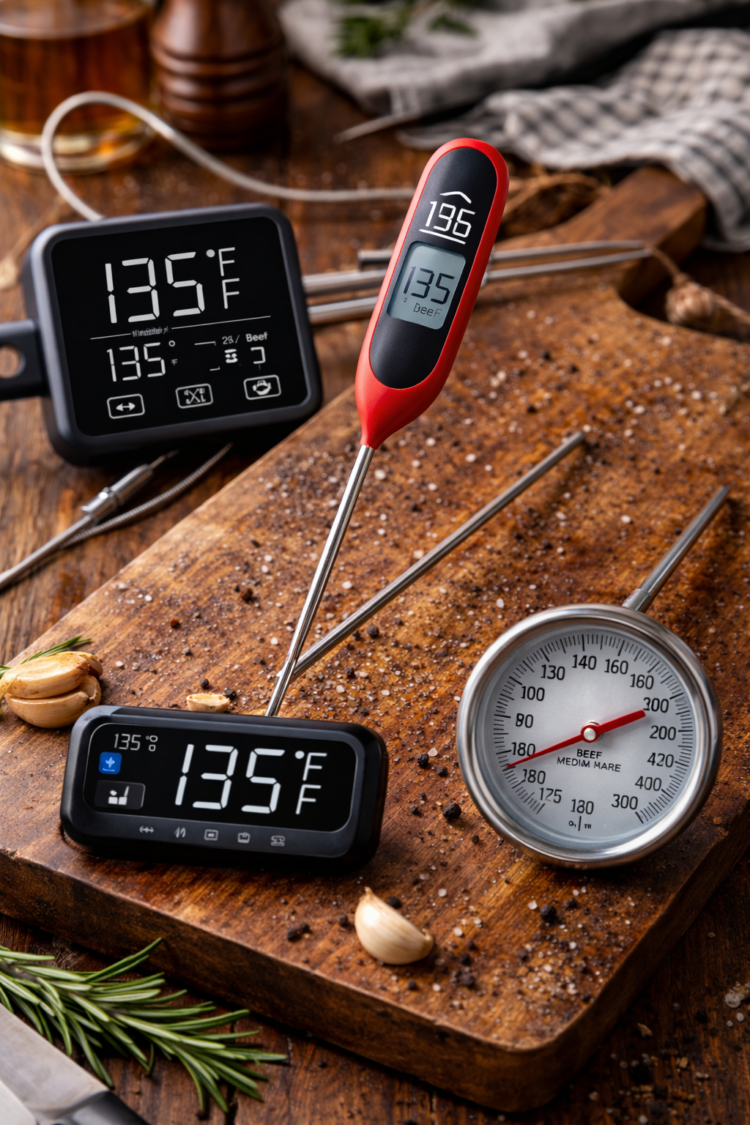
Learning to use meat thermometers completely changed the way I cook. What used to feel like guesswork—cutting into meat, hoping it was done, and quietly panicking—became calm, confident, and repeatable. Whether I’m cooking steak, pork, chicken, or fish, meat thermometers help me get consistent results without stress. This guide breaks down the best meat thermometers for cooking, how to use them, and which ones actually earn a place in my kitchen.
Why I Started Using Meat Thermometers
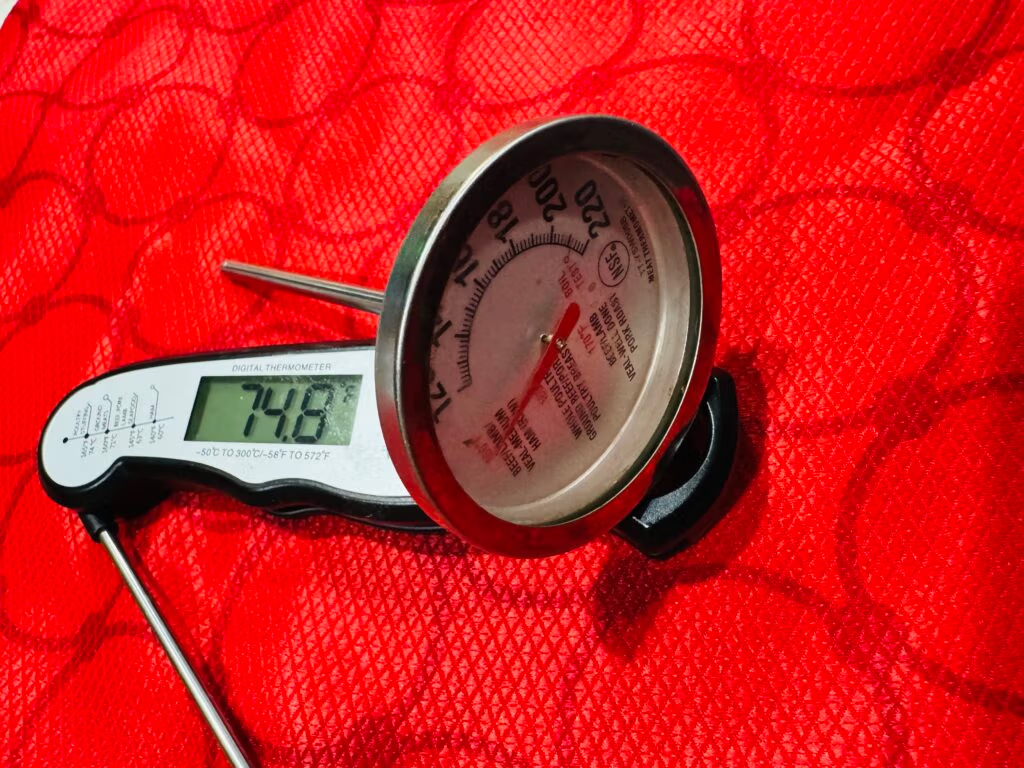
I didn’t start cooking with meat thermometers because I wanted to be technical. I started because I was tired of guessing and getting mixed results.
For a long time, I cooked based on feel and timing. If something was slow and forgiving, I felt confident. But anything that cooked quickly—fish, steak, anything on a grill or hot pan—made me nervous. I love a good medium-rare steak, but hitting that at home felt like a gamble. Some nights it was perfect. Other nights it was either underdone and awkward or overcooked and dry, with very little in between.
The real shift happened when I stopped thinking about doneness as a look and started thinking about it as a temperature. That’s when I realized meat temperature isn’t just about safety—it’s about flavor. The difference between juicy and dry, tender and tough, buttery and chewy often comes down to just a few degrees.
Steak is where this lesson really clicked for me. I spent a lot of time practicing pan-searing because, living in Indiana, grilling isn’t always an option—winter makes sure of that. So I learned how to get beautiful results on the stovetop, especially with ribeyes. That’s why I always point readers to my rosemary ribeye recipe. You can actually see how checking the temperature changed the outcome.
Once I started cooking with a thermometer, everything felt calmer. I wasn’t cutting into meat to check anymore. I could cook, check, adjust, and trust the process.
That’s also when I understood something important: temperature isn’t just a number—it’s a tool. It tells you what’s happening inside the food so you can get the exact texture and flavor you’re aiming for. And once you learn that, cooking stops feeling like luck and starts feeling repeatable.
Meat Temperature And Why It Matters
Below is a meat temperature guide. It is one of those things that seems boring… until you realize it solves about 80% of the stress in cooking meat.
For most of my cooking life, I thought temperature was just about safety. Don’t undercook chicken, don’t poison your family, the end. But once I actually started paying attention to internal meat temperatures, I realized it was about so much more than that. Temperature is what controls texture. It’s what decides whether meat is juicy or dry, tender or tough, buttery or chewy.
Two pieces of meat can look exactly the same on the outside and taste completely different on the inside just because they’re a few degrees apart. That’s why timing alone doesn’t work. Ovens run differently. Pans hold heat differently. Meat thickness varies. The clock can’t see what’s happening inside your food — but a thermometer can.
This guide gives you a reliable baseline so you’re not guessing anymore. Whether you’re cooking steak, chicken, pork, or fish, knowing the target temperature lets you cook with intention instead of hope. You can pull meat early and let carryover cooking finish the job, or give it a few more minutes without fear of ruining it.
| Food | Internal Temp | Notes |
|---|---|---|
| Chicken (whole or parts) | 165°F | Always fully cooked |
| Ground beef, pork, turkey | 160°F | Must be fully cooked |
| Steak (medium rare) | 135°F | Let it rest to 140°F |
| Pork tenderloin | 145°F | Juicy and slightly pink is perfect |
| Fish | 145°F | Should flake easily |
| Leftovers (reheated) | 165°F | Safe for a second go |
| Fully cooked ham (reheated) | 140°F | Just warmed through |
| Lamb | 145°F | Let rest before slicing |
Once you understand these numbers, everything becomes easier. And that’s where the real magic happens — because now temperature stops being a rule and starts being a tool.
Types of Meat Thermometers
Once you understand that temperature matters, the next question becomes which thermometer should I actually be using? Because not all meat thermometers are built for the same job, and using the wrong one can make cooking harder than it needs to be.
In my kitchen, I rely on three main types: instant-read thermometers, oven-safe thermometers, and digital or Bluetooth probe thermometers. Each one exists for a different reason, and knowing the difference is what turns these tools into real assets instead of clutter in a drawer.
Instant-Read Meat Thermometer

An instant-read meat thermometer is the quickest and most versatile option. This is the one you use when food is already cooking and you just need a fast, accurate check. You insert it into the thickest part of the meat, wait a few seconds, and you have your answer.
This type is especially helpful for fish, pan-seared steaks, chicken breasts, pork chops, and thinner cuts of meat. Anything delicate or fast-cooking benefits from this method because you’re not leaving a probe inside while it cooks.
Instant-read thermometers are also one of the best budget meat thermometers to start with. Most good ones fall in the $10–$25 range, making them affordable, low-commitment, and incredibly useful for everyday cooking.
If you only ever buy one meat thermometer, this is the one that covers the most situations.
Oven-Safe Meat Thermometer

An oven-safe meat thermometer is designed to stay inside the food while it cooks. You insert it before cooking, close the oven, and monitor the temperature without opening the door or cutting into anything.
This type works best for larger cuts of meat that cook slowly and can physically handle having a probe sitting in them — whole chickens, turkey, pork roasts, beef roasts, and anything holiday-sized.
Because these thermometers don’t rely on batteries or wireless signals, they’re extremely reliable for long cooks. They typically cost between $10–$20, making them one of the most affordable and dependable options for oven cooking.
These are not meant for fish or thin cuts — they’re meant for big, sturdy proteins that need steady monitoring.
Digital & Bluetooth Meat Thermometers

Digital and Bluetooth meat thermometers are the high-tech option. These use probes that stay inside the meat while sending real-time temperature updates to a display or your phone.
This type is perfect for thick steaks, pork, smoking, and grilling — especially when you want precision without hovering. You can set target temperatures, get alerts, and watch the progress without opening the oven or grill.
These are typically the most expensive, usually ranging from $50–$200+, depending on features and the number of probes. They’re an investment, but for people who grill often or cook large cuts regularly, they’re incredibly convenient.
Some grills come with built-in probes, which function the same way — they just display the temperature on the grill itself instead of an app.
These are best for cooks who like data, multitasking, and consistent results without constant checking.
How to Choose the Right Meat Thermometer for What You’re Cooking
Choosing the right meat thermometer isn’t about which one is “best” overall — it’s about matching the tool to the food and the cooking method. Different meats behave differently, and the thermometer that works beautifully for one situation can be completely wrong for another.
The biggest factor is meat thickness and cooking time. Thicker, sturdier cuts of meat can handle having a probe inserted and left in place. Whole chickens, turkeys, pork roasts, beef roasts, and thick steaks are good candidates for oven-safe or digital probe thermometers because the meat has enough structure to support the probe without damaging texture.
Delicate or fast-cooking proteins are a different story. Fish, thin steaks, chicken breasts, pork chops, and anything pan-seared or lightly roasted should almost always be checked with an instant-read meat thermometer. These foods cook quickly and are sensitive to moisture loss, so leaving a probe inside while they cook can actually compromise the texture. A quick check at the end gives you accuracy without interference.
Cooking method matters just as much as the meat itself. Long, slow oven roasts benefit from oven-safe thermometers because they don’t rely on batteries and can stay in place for hours. Digital and Bluetooth thermometers are excellent for grilling, smoking, and thicker cuts, but they’re not ideal for extended holiday roasts where battery life becomes a factor.
The simplest rule is this:
If the meat is thick and slow-cooking, a probe works.
If the meat is delicate or fast-cooking, use instant-read.
Once you understand that relationship, choosing the right thermometer becomes a practical decision instead of a guessing game.
Frequently Asked Questions
For the best internal temperature reading, insert your thermometer into the thickest part of the meat and avoid bones, fat, and gristle, which can give you a falsely high or low result. For thinner cuts, insert from the side so the probe tip reaches the center.
Yes — but only if it’s designed to be left in during cooking, such as an oven-safe or leave-in probe thermometer.
Common issues include: inserting the probe too near the bone or fat, not letting the thermometer settle before reading, or using the wrong type for the cooking method. Always allow a few seconds for the temperature to stabilize and place the probe in the correct spot.
With instant-read thermometers, check toward the end of the estimated cook time, but start early with thicker cuts so you can avoid overcooking. For probe or wireless thermometers, continuous monitoring lets you track progress without opening the oven or grill.
Final Thoughts
Learning how to use a meat thermometer genuinely changed the way I cook. It didn’t make my food more complicated — it made it more reliable. I stopped second-guessing myself, stopped cutting into meat “just to check,” and started cooking with actual intention instead of hope.
Once you understand how to check meat temperature and which thermometer fits which situation, everything feels calmer in the kitchen. You’re no longer chasing perfect results — you’re creating them on purpose. Whether you’re working with steak, chicken, pork, or fish, temperature becomes your quiet little secret weapon for better flavor, better texture, and way fewer cooking mishaps.
The best part is that you don’t need fancy equipment to get started. One good thermometer and a little practice is enough to completely level up your cooking confidence.
If you found this guide helpful, I’d love for you to subscribe to the blog. You’ll get new recipes, kitchen wisdom, and realistic dinner ideas delivered straight to your inbox — the kind of cooking that fits real life, not just special occasions.
And if you’d like to support the work that goes into testing recipes and writing these guides, you can also buy me a coffee. Every little bit helps keep this kitchen going and allows me to keep sharing recipes and tips you can actually trust.
Thanks for being here and learning with me.
— Camille
Check out My Latest Recipes
- No Bake Oreo Dream Cheesecake
 This Homemade Oreo Cheesecake recipe is a rich, creamy no bake dessert that keeps everything you love about Oreos and cheesecake perfectly balanced. The smooth cheesecake filling is infused with real Oreo crème for flavor. The chocolate cookie crust and topping add just the right amount of crunch. Each slice is thick, silky, and beautifully… Read more: No Bake Oreo Dream Cheesecake
 - An Easy Cheese Quiche Recipe You Will Make Again and Again
 Creamy, rich, and surprisingly simple, this cheese quiche recipe is the kind of breakfast that feels elegant without requiring much effort. This three cheese quiche recipe is made with a frozen pie crust, a silky egg custard, and layers of melted cheese for a texture that feels downright luxurious. If you’ve ever wondered how to… Read more: An Easy Cheese Quiche Recipe You Will Make Again and Again
 - This Homemade Cheesecake is Better Than Storebought and So Easy!
 This easy cheesecake recipe with graham cracker crust is creamy, smooth, and beautifully simple, with no water bath required and no complicated steps. If you’ve ever wondered how to make a classic cheesecake that feels indulgent but approachable, this is the one to try. Soft, rich, and perfectly balanced, this simple homemade classic cheesecake recipe… Read more: This Homemade Cheesecake is Better Than Storebought and So Easy!
 - You Will Love This Easy Strawberry Shortcake Overnight Oats Recipe
 Some mornings call for coffee and quiet. Others demand something sweet enough to convince you to get out of bed at all. These strawberry shortcake overnight oats live somewhere perfectly in between — creamy, gently sweet, and layered with real strawberries and graham cracker crumble that make breakfast feel like dessert without tipping into indulgence… Read more: You Will Love This Easy Strawberry Shortcake Overnight Oats Recipe
 - Buffalo Chicken Dip Recipe
 If you’re searching for a crowd-pleasing appetizer that delivers bold flavor without complicated prep, this buffalo chicken dip recipe checks every box. This easy buffalo chicken dip recipe uses simple ingredients, comes together quickly, and bakes into a hot, creamy, irresistible dish that belongs on every game day table. In this post, you’ll learn exactly… Read more: Buffalo Chicken Dip Recipe
 - How to Make a Roasted Butternut Squash Soup with Apples
 There’s something magical about roasting butternut squash until it turns golden, sweet, and just a little caramelized. This roasted butternut squash soup with apple wraps all that goodness into one velvety, creamy bowl that feels like a hug from the inside out. If you’ve been craving a homemade butternut squash soup recipe that balances comfort,… Read more: How to Make a Roasted Butternut Squash Soup with Apples
 - You Will Love To Snack On These Easy Goat Cheese Stuffed Dates: Luxury Made Easy
 If you’ve never made stuffed dates before, this goat cheese-stuffed dates recipe will make you a believer. These little bites combine smoky bacon, creamy goat cheese, and the caramel sweetness of dates for a balance that’s downright addictive. Whether you serve them at a dinner party, a date night in, or just for yourself after… Read more: You Will Love To Snack On These Easy Goat Cheese Stuffed Dates: Luxury Made Easy
 - How To Make Crispy Bang Bang Shrimp At Home
 This easy Bang Bang Shrimp recipe brings restaurant magic straight into your kitchen — juicy shrimp coated in a golden panko crust and tossed in a creamy, spicy-sweet sauce inspired by the Bonefish Grill Bang Bang Shrimp classic. It’s fast, bold, and addictive, the kind of snack or appetizer that makes people grab their phones… Read more: How To Make Crispy Bang Bang Shrimp At Home
 - How To Make a Perfect French-Canadian Meat Pie
 If you’ve ever wanted to master a classic French-Canadian meat pie recipe without all the fuss, this is it. This easy meat pie is rich, flavorful, and filled with seasoned pork and beef, mashed potatoes, and aromatic spices that make your home smell like pure comfort. You’ll learn exactly how to make an easy French-Canadian… Read more: How To Make a Perfect French-Canadian Meat Pie
